
Blog Details
Is Annual ECG Testing Enough If You Have Diabetes or BP?
Is Annual ECG Testing Enough If You Have Diabetes or BP?
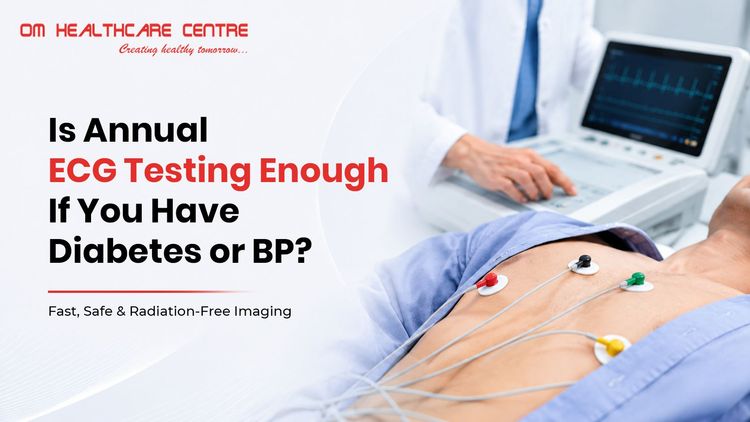
One ECG a year usually isn't enough if you're living with diabetes or high blood pressure. A resting ECG only captures a few seconds of the heart's electrical activity, so that a lot can go undetected between one yearly checkup and the next. Diabetes and high blood pressure are two of the most common contributors to heart disease, often without obvious symptoms. Going in for heart checks more frequently, at a reliable ECG center in Bhubaneswar, matters more than waiting for annual results.
Regular cardiac screening for diabetics is usually recommended every six months rather than once a year, especially once sugar levels have stayed high for a while. Closer monitoring helps catch problems before they turn serious.
Persistently high blood sugar can damage the nerves around the heart. This is called diabetic autonomic neuropathy. That nerve damage can mute pain signals, part of why a silent heart attack in diabetics is more common than most people realise. A diabetic patient might not notice chest pain that would send someone else straight to a hospital. So it's worth asking a doctor about extra heart checks.
High blood pressure does affect ECG results, since constant pressure makes the heart muscle work harder than normal. Over time, that extra effort can thicken the heart wall, and this shows up as visible changes on the reading. ECG frequency for hypertension patients usually increases once a doctor spots early signs of this thickening, since catching it early beats reversing it later.
Diabetes can absolutely cause abnormal ECG readings, even in someone who feels perfectly fine. Persistently high blood sugar damages blood vessels and nerves around the heart, and that damage often shows up as electrical changes, which doctors call ECG abnormalities in diabetes. These can include small rhythm shifts or signs of reduced blood flow, usually without any symptoms.
Chest tightness after a heavy meal confuses plenty of people, too. Is it acidity, or is the heart trying to say something? That confusion is worth its own read, so it might help to check out How To Know If Your Chest Pain Is Acidity or a Heart Problem?
An ECG can detect several heart problems in people with high blood pressure, including irregular heartbeats and early signs of a thickened heart muscle. It can also flag patterns suggesting reduced blood flow to the heart.
Decreased Blood Flow: The ECG can show patterns that suggest the heart muscle isn't receiving enough blood. Irregular Heartbeats: A skipped or uneven beat usually stands out the moment it hits the reading. Thickened Heart Muscle: A heart chamber that has become thicker or larger can be a sign of a problem long before it is felt. Past Heart Attack Signs: Leftover patterns from an earlier, unnoticed heart attack.
Heart monitoring for BP patients shouldn't stop at the ECG, though. Doctors usually pair it with regular pressure tracking and, depending on what the test shows, an echo or stress test.
An ECG gives you a starting point, but it won't cover everything when you're managing diabetes or high blood pressure. An echo or stress test reveals problems that a resting ECG won't pick up, while routine blood work on sugar and cholesterol tracks how much strain the heart is dealing with.
With diabetes or high blood pressure, it's worth getting your heart checked on a regular basis instead of waiting for one yearly ECG. Pairing it with the right follow-up tests beats relying on one report a year. That's exactly the kind of layered check OM Healthcare can help plan, so contact us to get a heart check that matches your actual risk.
Got more questions like this on your mind? The next post takes on another one worth understanding properly.
How long does an ECG usually take?
A standard ECG recording takes about a minute, with setup bringing the total visit time to around five to ten minutes. Results are often ready for the doctor to review the same day.
Does getting an ECG require fasting beforehand?
No, fasting isn't needed before a standard resting ECG, since food and drink don't interfere with the heart's electrical activity. The one thing to avoid is heavy lotion or oil on the chest on the day of the test, as it can prevent the electrodes from sticking properly.
Is the ECG test painful in any way?
No, the ECG test is completely painless. The electrodes placed on the skin only read electrical signals from the heart and never send any current into the body.