Blog Details
Can a Routine Eye Test Reveal Your Heart Health Problems Early?
Can a Routine Eye Test Reveal Your Heart Health Problems Early?
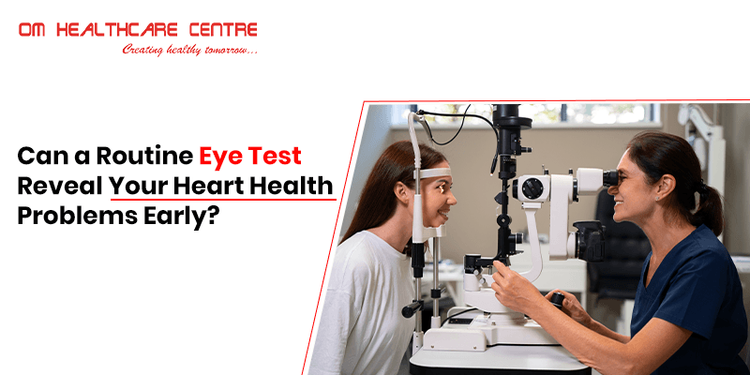
Your eyes can see more than you think. So can your optometrist. A proper eye exam doesn't just measure how well you see. It can flag high blood pressure, early heart disease, and other conditions you'd have no idea were there. The retina is the only place in the body where a doctor can look directly at live blood vessels without any kind of procedure. Just a light, a trained eye, and a few minutes. Those vessels often show signs of trouble long before you feel anything. Your eyes have been trying to tell you something. Book a consultation at the best eye test centre in Chandrasekharpur and find out what.
It can, and more often than people expect. Think of the blood vessels in your eye like the small pipes in a building. If the water pressure is too high, the small pipes start showing wear before the main ones do. The same logic applies here. The vessels in your retina are among the smallest in your body, so they're often the first to react when something is off with your circulation, blood pressure, or cholesterol. A doctor examining the retina can spot:
A healthy retina looks like a neat road map, smooth and evenly sized vessels running across it. When the cardiovascular system is under strain, that map starts to change.
Vessels thicken in some places, narrow in others. Some take on a copper or silver tint. In patients with long-standing high blood pressure, arteries crossing veins can leave compression marks, which doctors call arteriovenous nicking. That single detail, spotted early, can get a patient to the right specialist before anything serious develops. Cholesterol deposits show up as small yellowish flecks in the vessels, and what they suggest about the heart is worth paying attention to.
Take a Look At: Neurological Emergencies and Personalised Attention near Patia
Beyond the vessels themselves, a thorough eye exam can point toward a few other heart-related risks, like:
Most people who have these signs feel perfectly fine at the time. There’s no chest pain or dizziness.
A lot depends on the quality of the exam and the experience of the doctor conducting it.
A routine eye check-up won't catch what needs catching. A thorough eye exam, carried out by an experienced ophthalmologist, goes well beyond checking your prescription. At OM Healthcare, experienced ophthalmologists examine the retina and its vessels as part of every routine exam, looking for the kinds of vascular changes that indicate underlying cardiovascular risk, often before the patient has felt a thing. A good eye exam, done properly, doubles as a cardiovascular health check.
Yes, though not in the way you might expect. It won't replace your cardiologist. Think of it this way: a smoke detector doesn't tell you where the fire is. The eye exam works the same way. Unusual vessel changes in the retina are a signal to investigate, including blood tests, cardiology evaluation and appropriate imaging. The exam starts that process, and starting early almost always changes how things turn out. Most people visit an eye doctor far more often than a heart specialist. That makes this clinic a more valuable first stop than most people expect when they walk in. At OM Healthcare, every appointment is treated that way.
It is reliable enough to act on, not reliable enough to rely on alone. After all, an eye exam doesn't diagnose heart disease. It spots something that looks off and gives you a reason to follow up. Research has linked retinal vessel patterns to cardiovascular risk, and there is growing interest in retinal imaging as part of routine heart health screening. An eye exam carries no risk, takes less than an hour, and can pick up warning signs years before you'd feel anything.
Most people leave an eye appointment thinking about their prescription. Some leave with something more important: an early warning they had no idea was coming. At OM Healthcare Centre, the best eye test centre in Chandrasekharpur, every exam is treated as a full health assessment. Your eyes may already know something your heart hasn't told you yet. It's worth finding out.
1. Is it possible to have heart disease with no symptoms at all?
Yes, and that is exactly why retinal vessels change matter; they can show up years before chest pain, fatigue, or any other warning sign appears.
2. How often should I get my eyes examined for general health reasons?
Once a year is recommended for most adults, even if your vision seems fine, as many conditions show no symptoms in the early stages.
3. Do I need to do anything special to prepare for a thorough eye exam?
No preparation is needed; the exam is non-invasive, takes less than an hour, and carries no risk.