
Blog Details
Why Are Heart Attacks Becoming Common in Young Adults?
Why Are Heart Attacks Becoming Common in Young Adults?
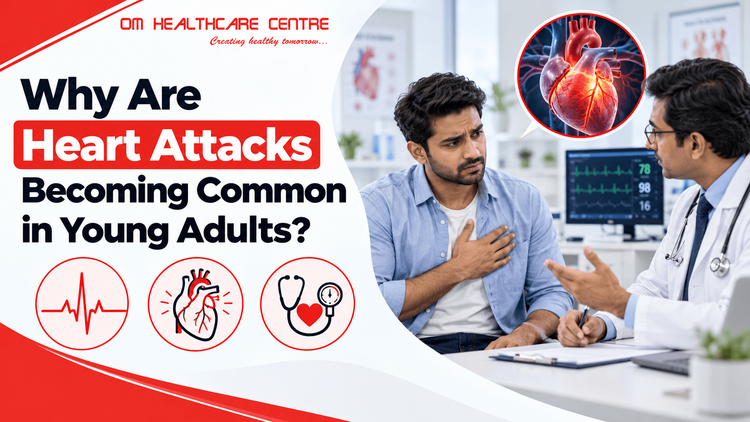
Heart attacks are becoming more common in young adults because modern routines and silent conditions like high blood pressure and diabetes now start taking a toll on the heart much earlier than they used to. Most people still picture an older man holding his chest, but doctors now meet patients in their thirties, and sometimes younger, who are busy, working hard, and feeling mostly fine.
At OM Healthcare, we have the best cardiology doctor in Bhubaneswar to help young adults catch heart problems early. Knowing the basics early and getting a timely cardiac health checkup can protect years of your life.
Heart attacks can happen well before the age of 40, because blocked arteries do not wait for a certain birthday. Fatty deposits can start building up inside the arteries in your twenties and thirties without any warning.
Over the years, these deposits slowly narrow the arteries. In younger people, this buildup can begin early and stay silent for a long time. A clot that forms over one of these deposits and blocks blood flow to the heart causes a heart attack. Here at OM Healthcare, our cardiac checkups help us spot risk factors early, before the narrowing turns into an emergency.
Heart attacks in young adults are mostly caused by everyday habits and hidden health issues that quietly damage the arteries over the years. Most heart attack risk factors look completely ordinary, which is why they get ignored. At OM Healthcare, our cardiology team can check your risk factors with simple tests, so you know where you stand before a problem shows up.
Here is what usually sits behind the problem:
The early heart attack signs that young adults most often ignore are tiredness that never lifts, breathlessness on the stairs, and a heavy feeling in the chest. These are common heart attack symptoms in young adults, and they usually get blamed on stress or a bad night’s sleep.
Sweating for no reason, an ache in the jaw or left arm, and sudden dizziness deserve attention too. At OM Healthcare, we recommend getting checked early rather than waiting for them to get worse.
A racing or fluttering heartbeat confuses many people as well. Is it just nerves, or something more? To know the difference, read our blog: Heart Palpitations: When Is It Just Stress and When Should You Worry?
Young adults should see a cardiologist before symptoms get loud, especially if they have risk factors or a family history of heart disease. Our team at OM Healthcare sees young adults for heart checkups and runs the tests on-site, so you get your answers in one place. If any of these sound like you, schedule a visit:
Heart attacks are no longer just an older person’s problem, but most of the risk can be caught early. Contact OM Healthcare to book your heart screening today. Our heart specialist in Bhubaneswar will go through your history, run simple tests, and tell you where you stand. With ECG and echo facilities in our clinic, you leave with clear answers. Coming up next: what actually happens during a cardiac health checkup, and which tests your doctor may suggest.
A 25-year-old can have a heart attack, though it is uncommon. Fatty deposits can start building up in the arteries in your twenties, especially with smoking, diabetes, high cholesterol, or a family history of early heart disease.
The first signs of a heart attack in young adults are chest pressure or heaviness, breathlessness, unusual tiredness, cold sweats, and pain in the jaw or left arm. Many young people mistake them for stress or acidity, so they delay getting help.
You can lower your risk by staying active, eating fewer fried and packaged foods, sleeping well, avoiding tobacco, and keeping an eye on your blood pressure, blood sugar, and cholesterol. Our team at OM Healthcare can check these numbers during a cardiac health checkup and tell you what to work on first.